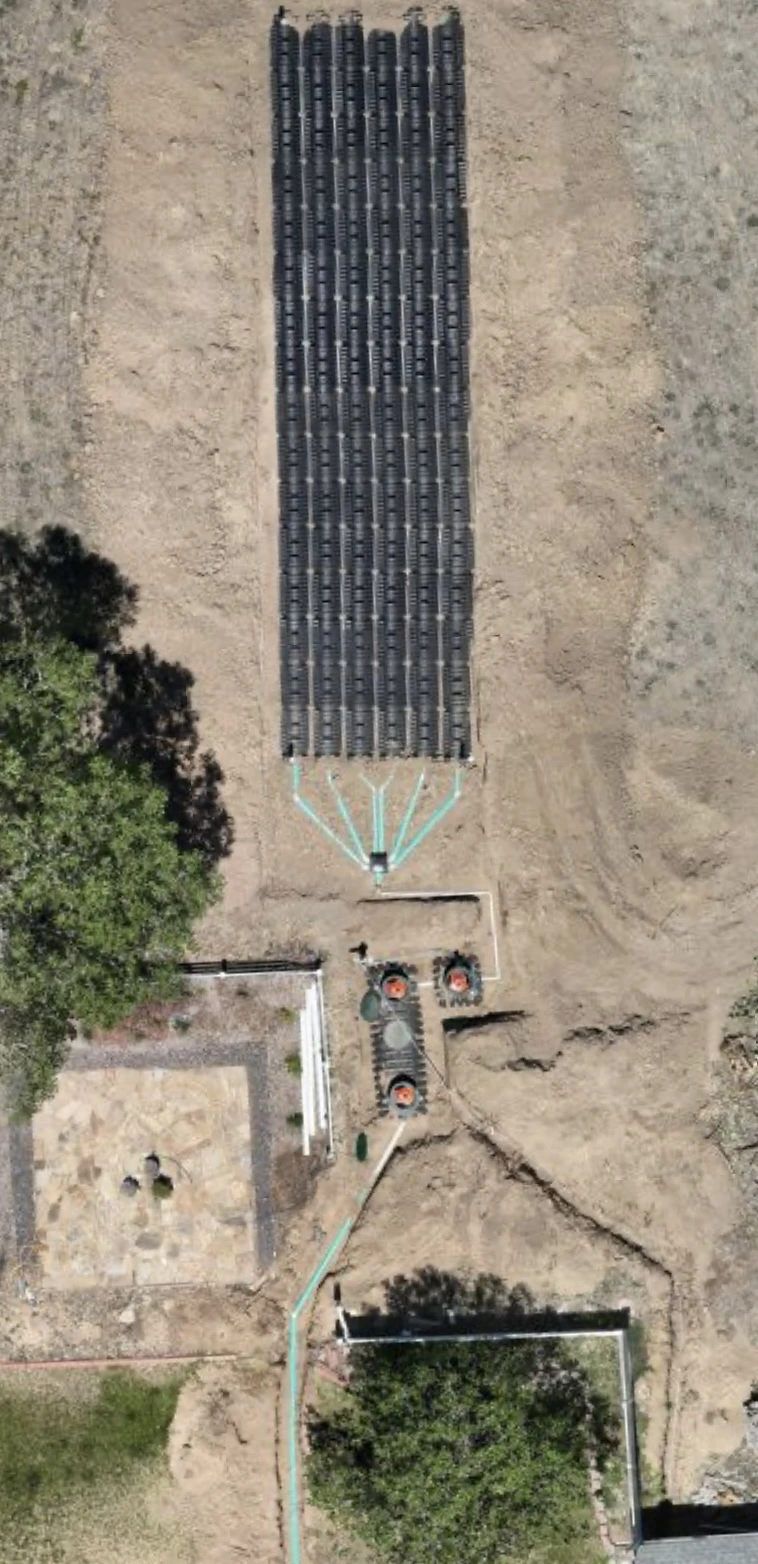
Turnkey commercial OWTS design, high-strength wastewater pre-treatment, and CDPHE Regulation 43 permitting for businesses, RV parks, agricultural hubs, and developments across Colorado.
Properties unserved by municipal sewer lines generate complex wastewater loads. We engineer custom On-site Wastewater Treatment Systems (OWTS) tailored to high-capacity demands and strict health codes.
High surge volume and variable seasonal flows require specialized equalization tanks, large-volume soil treatment areas (STA), and heavy-duty dump station management.
High-strength organic waste, fats, oils, and grease (FOG) quickly clog standard leach fields. We integrate engineered commercial grease interceptors and advanced aeration systems (ATU).
Weld and Adams county processing plants, produce washing facilities, and equipment repair yards generate non-standard chemical or sediment loads requiring heavy pre-treatment design.
Continuous daily flows exceeding thousands of gallons require multi-chamber concrete septic tanks, dosing siphon vaults, and alternating pressure-dosed drain fields.
Intermittent weekend surges mixed with acidic or high-BOD process wastewater require engineered holding infrastructure and controlled hydraulic loading rates.
Multi-tenant retail centers need reliable, code-approved wastewater infrastructure to satisfy property transfers, county use permits, and lease expansions.
End-to-end commercial wastewater management from initial soil testing and site design to heavy excavation and ongoing compliance maintenance.
Commercial systems demand rigorous soil morphology evaluations, percolation testing, and engineering specifications. We collaborate with licensed Professional Engineers (PE) to produce complete stamped design documents compliant with CDPHE Regulation 43 and local health departments across Weld, Larimer, Adams, Boulder, Jefferson, and Arapahoe counties.
Understanding state versus local permitting authority is critical for project timelines:
Our heavy excavation equipment fleet handles large-scale concrete septic tank sets (1,500 to 10,000+ gallon capacities), dosing chambers, commercial lift stations, and expansive chambered or gravel-less Soil Treatment Areas (STA).
Commercial kitchens and processing facilities produce Biochemical Oxygen Demand (BOD) and Total Suspended Solids (TSS) far exceeding residential waste.
We install secondary Aerobic Treatment Units (ATUs) and specialized grease interceptors to reduce effluent strength to Treatment Level 1 (TL1) before soil application, preventing premature leach field clogging.
Navigating Colorado wastewater laws requires deep technical understanding. AB Septic ensures every commercial installation strictly adheres to 5 CCR 1002-43 guidelines, guaranteeing structural longevity and legal compliance.
Strict isolation distances from water wells (100 ft minimum), surface water, property lines, and commercial building foundations are verified prior to excavation.
Implementation of advanced treatment technology to handle varying effluent strengths and meet tight vertical separation distances to bedrock or water tables.
Certified National Association of Wastewater Technicians (NAWT) inspections for commercial real estate transfers, sewer camera diagnostics, and structural tank reports.
Common questions regarding commercial septic systems in Colorado.
Commercial OWTS are defined by non-residential wastewater characteristics, daily flows over standard household metrics, or high-strength waste generation from food service, RV parks, agricultural processing, or multi-tenant facilities governed under CDPHE Regulation 43.
Systems equal to or under 2,000 Gallons Per Day (GPD) are permitted locally by county public health agencies. Systems exceeding 2,000 GPD require site location and engineering approval directly from the CDPHE Water Quality Control Division.
High-strength waste with elevated Fats, Oils, and Grease (FOG) or high BOD must be pre-treated. We install external commercial grease interceptors, supplemental aeration tanks, or Advanced Treatment Units (ATU) to lower waste strength to standard baseline levels before entering the leach field.
Yes. Most Colorado counties require annual or bi-annual Operation & Maintenance (O&M) reporting submitted by certified technicians for advanced, commercial, or pressure-dosed OWTS installations to maintain active operating permits.
Speak directly with a Colorado licensed wastewater contractor. We review engineering plans, conduct site visits, and prepare competitive installation proposals.
📍
16570 Timber Cove St
Hudson, CO 80642