The core difference between a septic tank and city sewer is ownership and ongoing cost. A city sewer connection involves monthly utility fees ($600–$1,400+ per year) where the municipality handles treatment, though the homeowner still owns the lateral pipe to the street. A private septic system (OWTS) eliminates monthly sewer bills entirely, requiring only routine pumping every 3 to 5 years ($400–$600), but places full responsibility for repairs and replacement on the property owner.
When shopping for a home across the Colorado Front Range—from suburban parcels in Brighton and Erie to expansive acreage in Greeley or foothill properties in Evergreen—you will encounter both municipal sewer grids and private On-Site Wastewater Treatment Systems (OWTS).
Each setup carries distinct financial and operational advantages. Understanding how they compare helps you plan your long-term household budget.
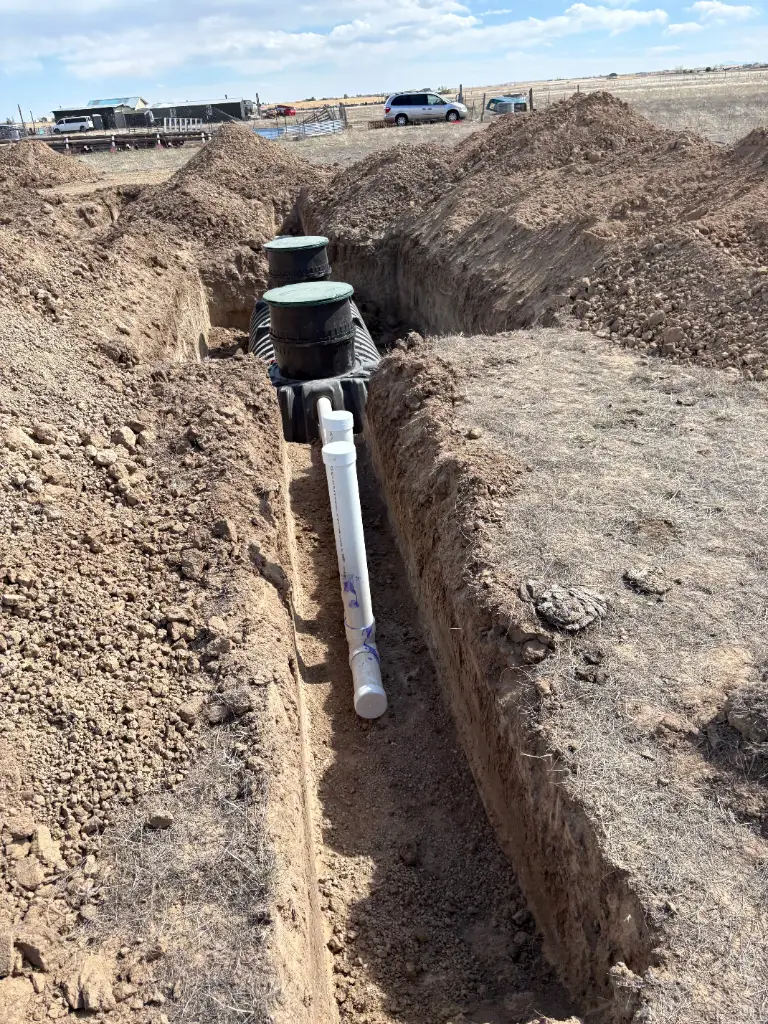
Private on-site wastewater management gives homeowners utility independence with proper maintenance.
Direct Comparison: Septic vs. Sewer
| Feature | Private Septic System | Municipal City Sewer |
|---|---|---|
| Monthly Utility Bill | $0 / month | $50 – $120+ / month |
| Routine Maintenance | Pumping every 3–5 yrs (~$400–$600) | None (handled by city) |
| Homeowner Responsibility | Tank, pump, & drain field | Lateral line from house to main |
| Lifespan | 25–40+ years (with care) | Indefinite (municipal utility) |
| Real Estate Transfer | Mandatory NAWT inspection | Optional sewer scope |
The Pros & Cons of a Septic System
✓ Advantages
- • No Monthly Bills: You never receive a recurring municipal sewer or wastewater assessment.
- • Environmental Recycling: Naturally recharges local groundwater aquifers right on your property.
- • Durability: Modern polyethylene tanks and chamber fields last 30 to 40+ years when pumped on schedule.
✗ Considerations
- • Repair Costs: If the drain field fails from neglect, drain field repairs or replacements fall entirely on the owner.
- • Usage Care: You must be mindful about what you flush to protect live tank bacteria.
- • Transfer Rules: Selling your home requires an official NAWT property transfer inspection.
Which is Right for Your Property?
In established urban cores, city sewer is often the only option due to lot size limits. However, on large residential lots, horse properties, and foothills parcels, private septic systems offer independence and long-term cost savings.
By maintaining a strict pumping interval every 3 to 5 years and keeping access risers sealed, an engineered septic system provides decades of trouble-free service.
Frequently Asked Questions
Is it cheaper to have a septic tank or city sewer?
In the long run, a well-maintained septic system is often more economical day-to-day because there are zero monthly municipal sewer utility bills. Pumping maintenance averages roughly $10 to $15 per month over a 3-year span, compared to $50 to $120+ in monthly city sewer fees.
Does a septic system decrease home property value?
No. On rural, semi-rural, and acreage parcels across the Colorado Front Range, septic systems are standard. As long as the system has a valid county Use-Permit and passes a NAWT transfer inspection, it does not negatively impact market value.

Questions About Your Septic Infrastructure?
Austin Bitz is an experienced Front Range wastewater installer and NAWT certified inspector. Call AB Septic at 720-883-3390 for straightforward assessments across Weld, Boulder, Larimer, Adams, Arapahoe, and Jefferson Counties.