A sewage smell in your yard is primarily caused by (1) a loose or cracked septic tank access lid, (2) an oversaturated or failing drain field pushing effluent to the surface, or (3) atmospheric downdrafts pushing roof vent stack gases down into your yard. Inspect your tank risers first, check for soggy lawn patches over lateral lines, and limit indoor water usage if drains begin backing up.
Walking outside into a blast of rotten-egg odor is one of the most frustrating experiences for Colorado homeowners on septic systems. That distinctive smell is caused by hydrogen sulfide gas, a natural byproduct of anaerobic bacterial digestion taking place inside your septic tank.
Under normal operation, these gases should vent harmlessly above your home's roofline through plumbing stacks. When odors concentrate in your yard, it indicates a breach in containment or an absorption failure.
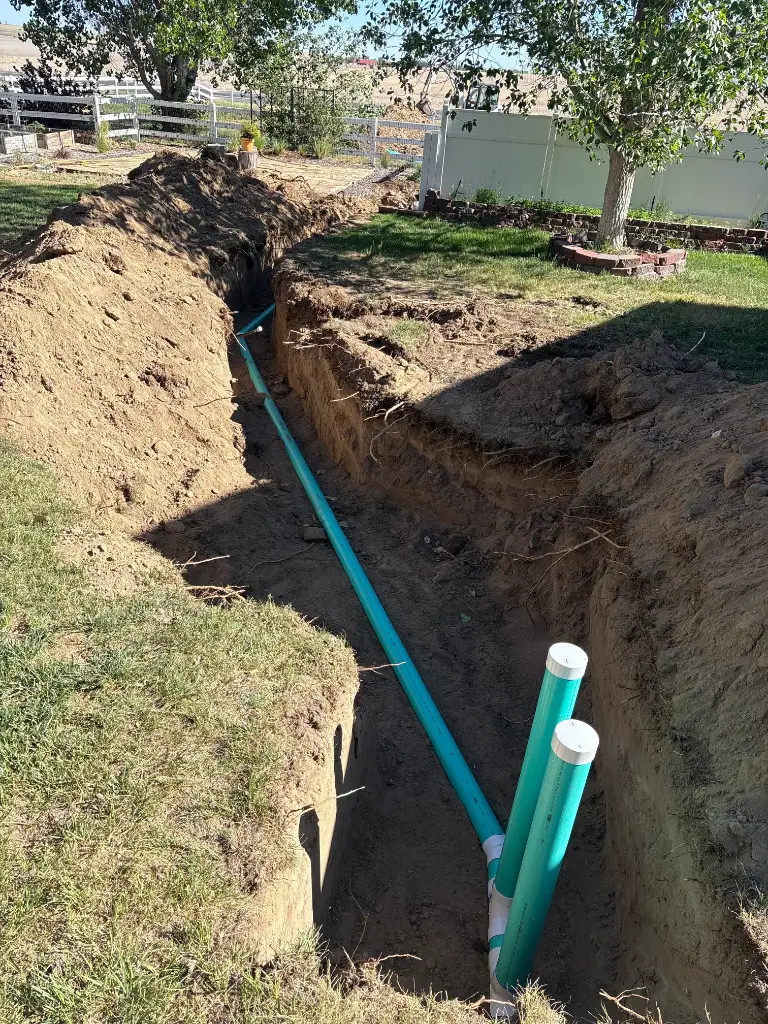
Uncovering buried septic infrastructure to locate cracked fittings and gas leaks.
1. Unsealed or Cracked Septic Tank Access Lids
The most frequent and easily fixable cause of localized odors is an unsealed access riser or cleanout port. If your tank sits near grade level and the rubber gaskets on your green Polylok lids have dry-rotted or cracked, sewer gas will seep out continuously.
- The Fix: Inspect the screws and rubber seal rings on all access risers. If older concrete lids are crumbling from gas corrosion, upgrade to sealed polyethylene risers.
- Next Step: Learn more about our structural tank replacements and riser retrofits.
2. Leach Field Bio-Mat Clogging & Ponding Effluent
If the odor is accompanied by soft, squishy soil or overly vibrant green strips of grass in your absorption zone, your drain field is struggling to filter liquid waste. Over time, an impermeable bio-mat layer forms beneath distribution lines, preventing effluent from sinking into the subsoil.
When wastewater cannot percolate downward, it rises toward the surface, bringing raw sewage odors and black bacterial sludge with it.
How to Spot Drain Field Failure:
- • Standing gray water pooling over lateral trenches
- • Soil feels spongy underfoot even after several dry days
- • Plumbing fixtures gurgle when washing machines drain
3. Plumbing Vent Stack Downdrafts
In Colorado foothills and mountainous terrain (such as Evergreen, Morrison, or Golden), sudden shifts in wind patterns and canyon thermals can push air down over your roof.
If your roof plumbing vent pipe is too short or sits near high roof ridges, prevailing winds can force venting gases back down into your patio or yard space. Installing a carbon-activated vent filter cap onto the roof stack often eliminates this issue completely.
Frequently Asked Questions
Is smelling sewage in the yard an immediate emergency?
While sewer gas outside is not immediately hazardous if dissipated by air, it indicates an unsealed access lid, a blocked vent, or saturated effluent escaping to the ground surface. If accompanied by slow indoor drains, stop high water usage immediately to avoid sewage backups.
Why do I only smell sewage in the yard after it rains?
Heavy rainfall saturates surface soil, restricting airflow and preventing the leach field from absorbing wastewater. Saturated ground forces trapped hydrogen sulfide gases upward into the surrounding air.
Should I add chemical odor eliminators directly to my tank?
No. Chemical additives disrupt the live bacterial colonies needed to break down solids, accelerating sludge carryover into your drain lines.
When should I call for an emergency inspection?
If you smell sewage while indoor drains are slow or backing up into bathtubs, stop water usage immediately and call for emergency septic diagnostics.

Need Help Diagnosing Your System?
Austin Bitz is a licensed OWTS installer and NAWT certified inspector serving Weld, Boulder, Larimer, Adams, Arapahoe, and Jefferson Counties. Call AB Septic at 720-883-3390 for straightforward, line-item diagnostics.