While many septic issues can be repaired, a full system replacement is required if you experience: (1) Severe concrete deterioration or collapsing tank lids, (2) A leach field that remains swampy and saturated even after line jetting, (3) Contamination in nearby water wells, or (4) Constant plumbing backups despite recent tank pumping.
No homeowner wants to hear that their septic system needs to be completely replaced. It is a major excavation project that requires county permitting, soil percolation testing, and significant financial investment.
However, aging systems—particularly those built over 30 years ago across Colorado's Front Range—eventually reach the end of their operational lifespan. Here are the four definite indicators that your system has moved beyond a targeted septic component repair.
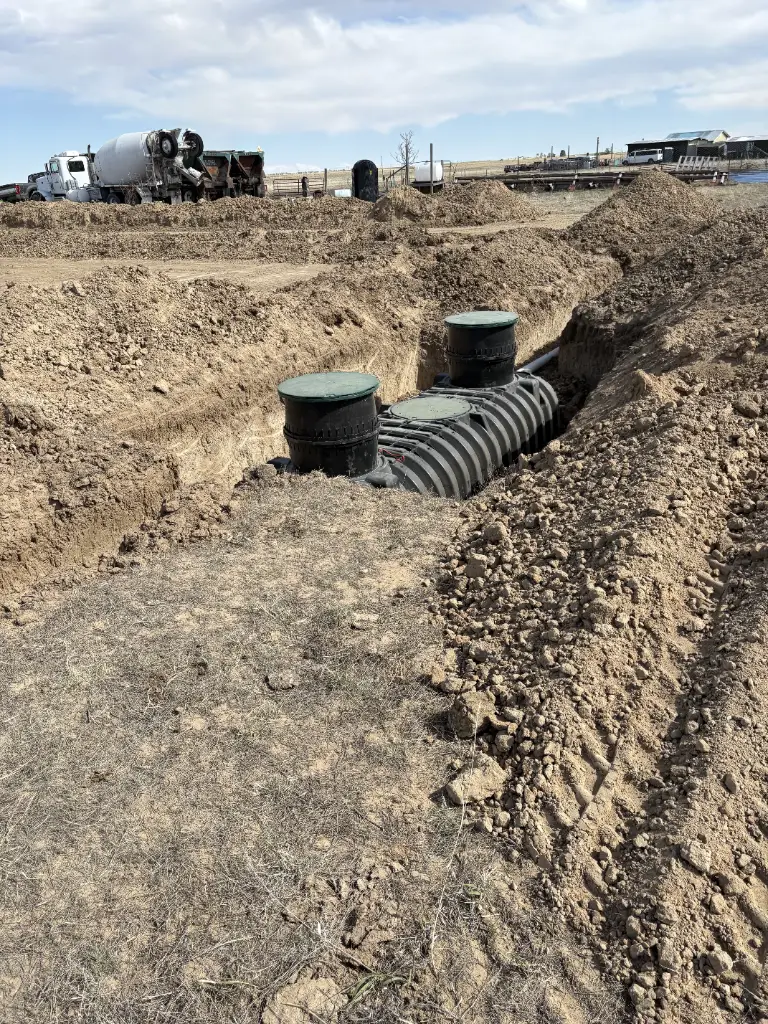
Excavating an aging, collapsed system to install a modern, county-compliant OWTS.
1. Crumbling Concrete & Sunken Lids
The airspace at the top of a septic tank is highly toxic. Anaerobic bacteria break down waste and release hydrogen sulfide gas. Mixed with moisture, this forms sulfuric acid, which literally eats away at the concrete from the inside out.
If your concrete tank lid is visibly sagging, rebar is exposed, or the internal baffle walls have crumbled into the sludge layer, the tank is structurally compromised and poses a severe collapse hazard. It must be replaced immediately.
2. The "Swamp" Will Not Drain
A squishy leach field doesn't always mean a total replacement. Sometimes, high-pressure jetting can clear the biomat.
However, if your yard remains a swamp of standing black water, or if effluent immediately backs up again just days after having the tank pumped, the soil structure has permanently failed (known as hydraulic overload). The old trenches must be abandoned, and a new engineered drain field must be excavated.
3. Well Water Contamination
If your property relies on a private water well, local health departments require strict setback distances (typically 100 feet minimum under CDPHE Regulation 43) between the wellhead and the septic absorption field. If water testing reveals high levels of coliform bacteria, nitrates, or E. coli, your septic effluent is likely bypassing the natural soil filter and draining directly into the aquifer.
4. Constant Backups Despite Pumping
Pumping a septic tank is routine maintenance. It is not a magic fix for a broken system. If you hire a pumper to empty your tank, and your home's toilets and showers begin backing up again just a few weeks later, the tank is not the problem—the outlet baffle or the drain field has completely collapsed, giving the daily water nowhere to go.
Frequently Asked Questions
How long does a concrete septic tank last?
A properly maintained concrete septic tank typically lasts 20 to 40 years. However, high levels of hydrogen sulfide gas, aggressive soil acidity, or lack of pumping can reduce this lifespan significantly by corroding the concrete.
Can a saturated drain field recover without full replacement?
If the saturation is caused by a crushed D-box or early biomat buildup, high-pressure line jetting and D-box leveling can often restore drainage. However, if the underlying soil pores are permanently clogged with solid sludge (hydraulic failure), a new engineered absorption bed must be excavated.

Suspect Your System is Failing?
Never agree to a total system replacement without an honest, independent diagnostic inspection. Call AB Septic at 720-883-3390 for a free second opinion across Northern Colorado.