As a rule of thumb, residential septic tanks in Colorado should be pumped every 3 to 5 years. A standard 1,000-gallon tank for a family of 4 requires pumping approximately every 2.5 to 3 years. Frequent garbage disposal usage, water softeners, or high household occupancy will shorten this interval significantly.
Your septic tank is designed to act as a settling basin. Heavier solids settle to the bottom as sludge, while lighter fats and oils float to the top as scum. The clarified liquid in the middle (effluent) exits through an outlet baffle into your drain field.
Pumping removes accumulated sludge before it builds high enough to escape the tank and clog the soil pores in your absorption trenches. Learn the difference in our guide on septic pumping vs. cleaning.
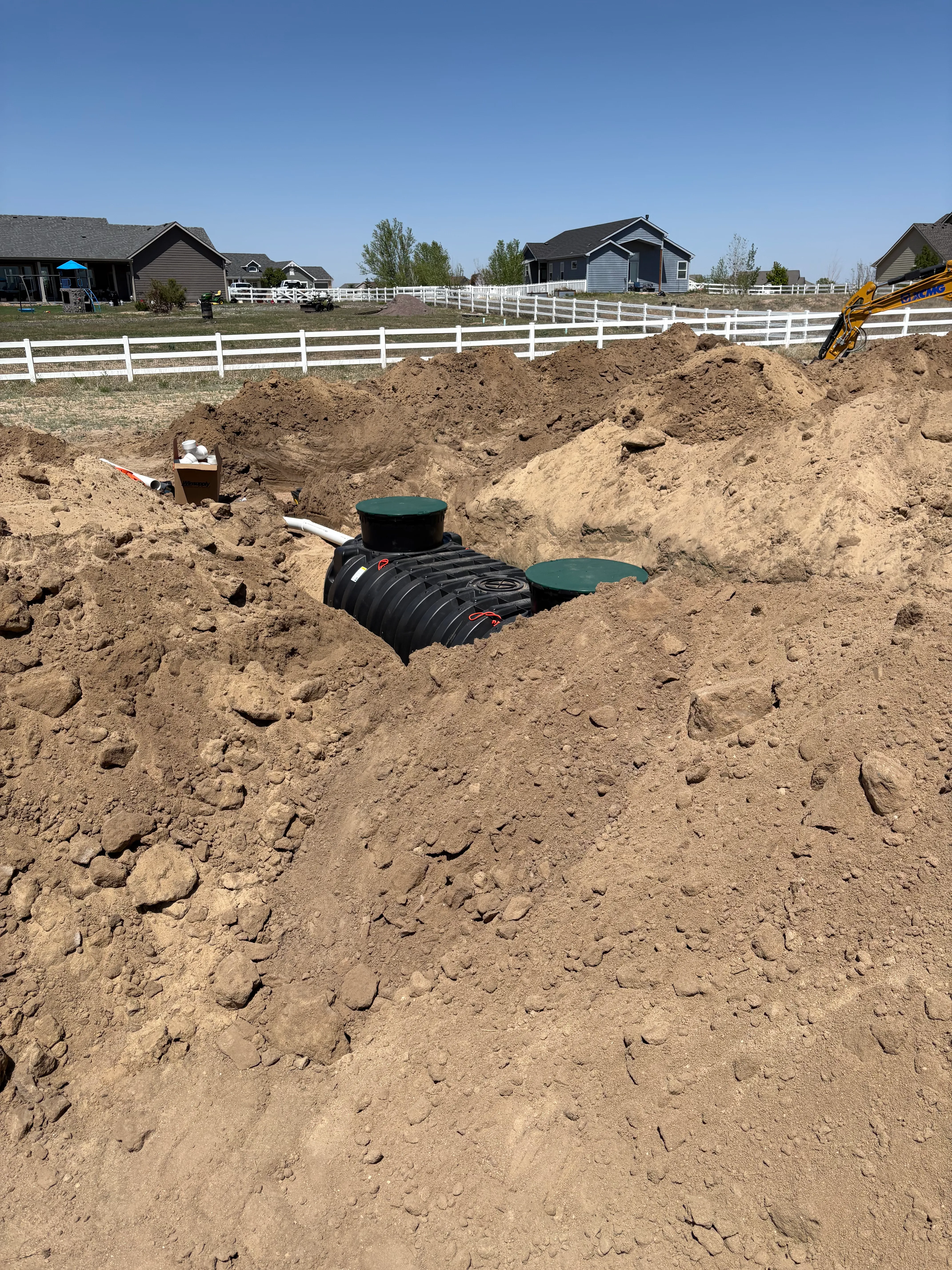
Maintaining adequate liquid volume inside the tank allows proper settling and bacterial digestion.
Estimated Pumping Frequency (In Years)
| Tank Size | 1-2 People | 3-4 People | 5-6 People |
|---|---|---|---|
| 1,000 Gallons | 5.0 Years | 2.6 Years | 1.5 Years |
| 1,250 Gallons | 6.5 Years | 3.4 Years | 2.0 Years |
| 1,500 Gallons | 8.0 Years | 4.2 Years | 2.6 Years |
3 Factors That Accelerate Pumping Frequency
- Garbage Disposals: Introduces dense, un-digested food waste that increases sludge accumulation by up to 50%. See our full list of what not to flush or pour down the drain.
- Water Softener Discharge: Brine discharge can alter bacterial efficiency and add hundreds of gallons of excess hydraulic load.
- Older Undersized Tanks: Historic acreage homes in Weld, Boulder, or Adams counties often have legacy 500–750 gallon tanks that fill quickly.
Pumping vs. Replacement Costs
Routine pumping typically costs between $400 and $700 depending on location and tank volume. Neglecting pumping allows sludge to migrate into the absorption bed, causing total biological failure.
A full drain field replacement or septic system replacement costs tens of thousands of dollars. Pumping is the single most cost-effective preventive maintenance you can perform.
Need a Routine Septic Tank Pump-Out?
While AB Septic specializes in system repairs, access riser installations, NAWT inspections, and engineered replacements, we coordinate routine tank pumping directly with Austin's dad, Steve Helvig at The Terd-inator LLC. Call Steve directly at (720) 234-2499 to schedule a routine pump-out!
Frequently Asked Questions
What happens if I never pump my septic tank?
Over time, heavy sludge and floating scum fill the tank's liquid volume. When solid waste reaches the outlet baffle, it overflows directly into the drain field lateral lines, causing biological clogging and total leach field failure.
Do garbage disposals affect how often a tank must be pumped?
Yes. Using an in-sink garbage disposal introduces finely ground food matter that resists normal bacterial breakdown, increasing solid accumulation rates by up to 50% and requiring more frequent pumping.

Need Riser Lids, Effluent Filters, or System Diagnostics?
Tired of digging up buried concrete lids every time you need your tank pumped? Austin Bitz installs watertight Polylok grade-level access risers and performs system diagnostics across Northern Colorado. Call 720-883-3390.