A sounding septic alarm indicates a high-water condition in your pump tank, meaning wastewater is not being pushed to the drain field. To handle it safely: (1) Flip the toggle switch to 'Silence' to quiet the buzzer while leaving the red light active, (2) Halt all heavy water use (laundry, dishwashers, showers), (3) Check your home's breaker box for a tripped pump circuit, and (4) Call a licensed technician to test the float switch and pump motor.
If you have an engineered On-Site Wastewater Treatment System (OWTS) with a dosing tank or lift station, your system relies on an electric pump to push effluent up to the absorption field.
When the liquid level inside the pump chamber rises above the normal operating range, a high-water float activates the control panel alarm on the side of your house or in your garage.
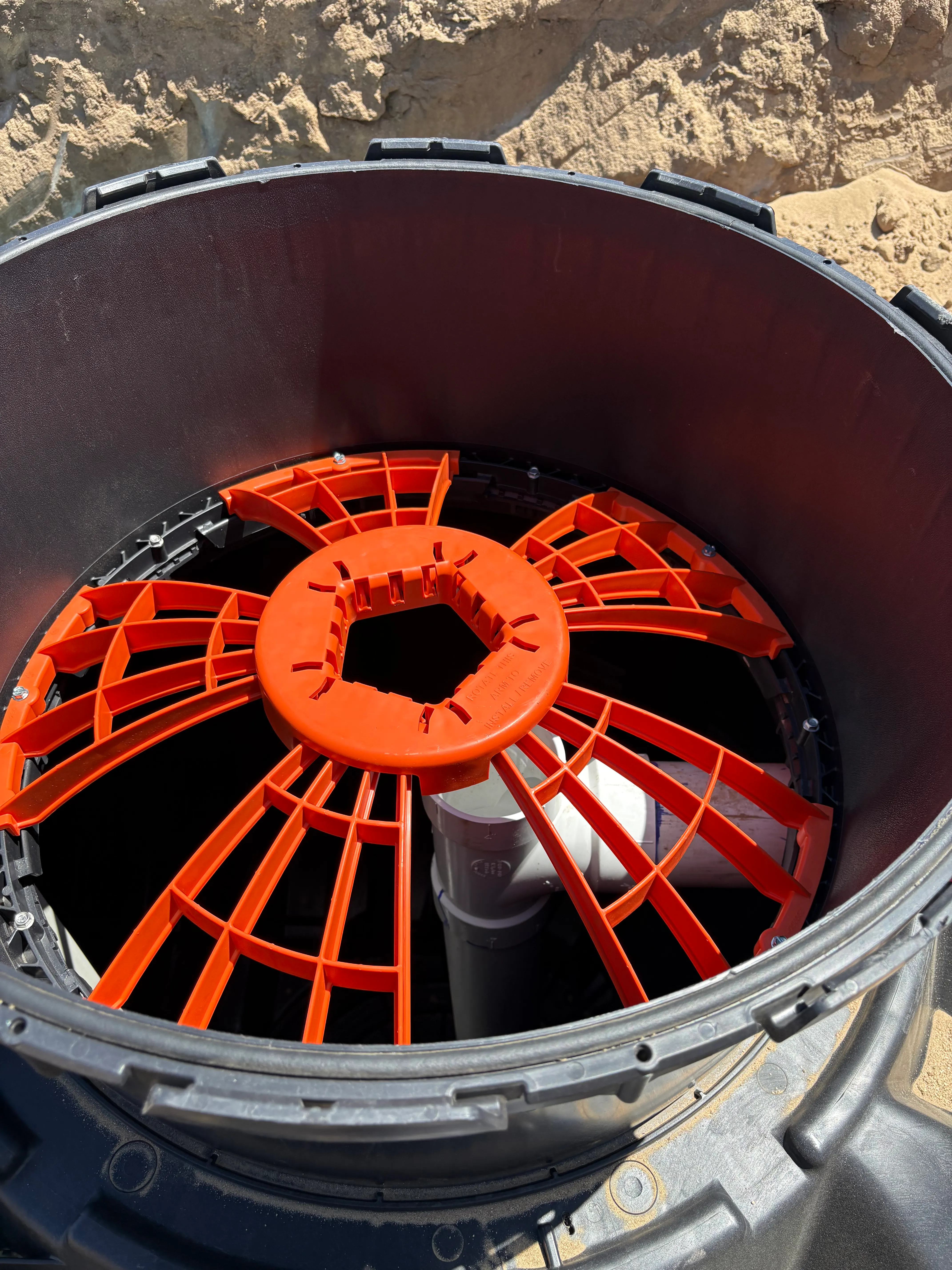
Inspecting pump chamber wiring and high-water float assemblies during an emergency service call.
Step 1: Silence the Alarm (Do Not Ignore the Light)
The loud buzzer is designed to grab your attention immediately. Locate the septic control box on your exterior wall. Underneath or on the side of the box, you will find a small toggle switch labeled "Silence / Normal".
Flip this switch to Silence. The loud horn will stop, but the red warning beacon will remain illuminated. Keep the beacon on so technicians know the high-level condition is still active.
Step 2: Stop All Non-Essential Water Usage
Once the alarm sounds, your pump chamber only has an emergency storage capacity of approximately 24 to 48 hours of minimal household water before effluent reaches the inlet pipe and begins backing up into lowest-level plumbing fixtures.
- Do NOT run washing machines or dishwashers.
- Avoid long showers or filling bathtubs.
- Minimize toilet flushes until the pump is repaired.
Step 3: Check Your Circuit Breaker Panel
Before assuming the pump motor is completely dead, walk to your main electrical panel. Look for breakers labeled "Septic", "Pump", or "Lift Station".
If the breaker has tripped into the middle position, turn it fully to OFF and then back to ON once. If it trips again instantly, a short circuit or locked pump impeller is present—do not continue resetting it.
Why Did the Alarm Go Off? 4 Common Culprits
1. Burned-Out Effluent Pump
Septic pumps run on mechanical impellers with a working life of 10 to 14 years. When the motor fails, effluent accumulates rapidly. Learn about our emergency pump replacement services.
2. Tangled or Failed Float Switch
Float switches hang inside the chamber and bob with water levels. Grease buildup or physical tangling can prevent the "On" switch from signaling the pump.
3. Heavy Rain or Groundwater Infiltration
Cracked riser joints or unsealed cleanouts allow torrential storm runoff into the tank, overwhelming pump capacity during spring snowmelts or saturated drain field conditions.
4. Corroded Internal Wiring
Older systems installed before 2014 often placed wire junctions inside corrosive tank air spaces. Upgrading to exterior junction boxes resolves recurrent shorts.
Frequently Asked Questions
How long can you use water after a septic alarm goes off?
Most residential pump chambers have a reserve capacity of 150 to 300 gallons above the high-water alarm float—roughly 24 to 48 hours of minimal, essential water use (toilets and handwashing only). Running laundry or showers will quickly fill this reserve and cause raw sewage to back up into the house.
Will the septic alarm reset itself once the water level drops?
Yes. Once the pump is repaired or catches up with a temporary surge, the high-water float drops back down and the red warning light automatically turns off. Remember to flip the toggle switch back from "Silence" to "Normal" so the audio buzzer is armed for future emergencies.

Need Immediate Pump Diagnostics?
Austin Bitz is an experienced Front Range wastewater specialist providing emergency pump pull-and-replace services across Weld, Larimer, Boulder, Adams, Arapahoe, and Jefferson Counties. Call 720-883-3390 for immediate dispatch.