Septic Pumping utilizes a vacuum hose to remove the liquid effluent and floating scum layer from the tank; it leaves heavier, settled sludge behind. Septic Cleaning is a much deeper service that utilizes high-pressure water jets or a "crust buster" to physically break up and remove hardened, compacted sludge from the very bottom of the tank walls.
When you call a septic provider and say, "My tank is full," the technician will usually schedule a routine pump-out. However, if your tank hasn't been serviced in a decade, a simple pump-out won't actually restore your system's capacity. Here is the technical difference.
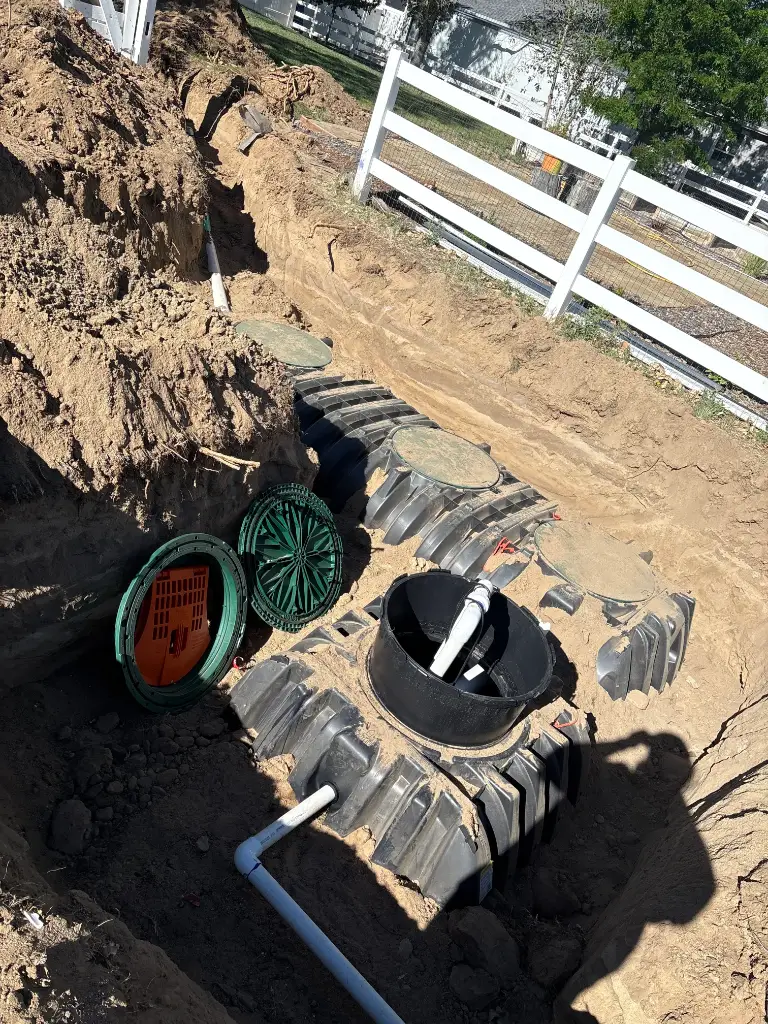
Modern Polylok access risers make routine pumping and deep tank cleaning significantly easier by eliminating the need to dig up the yard.
Technical Comparison: Pumping vs. Cleaning
| Feature | Septic Pumping | Septic Cleaning |
|---|---|---|
| Target Material | Liquid effluent & floating scum | Compacted bottom sludge & wall scale |
| Equipment Used | Standard vacuum truck hose | Vacuum hose + hydro-jetter or agitator |
| Recommended Interval | Every 3 to 5 years | Every 10+ years or upon neglect |
| Cost Profile | Routine / Lower cost | Labor-intensive / Higher cost |
What is Septic Pumping?
Pumping is standard, routine maintenance. A technician inserts a large vacuum hose through your access lid and removes the free-flowing liquids (effluent) and the lighter floating solids (the scum layer) that sit on top of the water.
Because standard pumping relies purely on vacuum suction, it does not remove the heavy, compacted solids (sludge) stuck to the bottom of the tank. If you maintain a strict 3-to-5 year pumping schedule, routine pumping is usually all you need.
What is Septic Cleaning?
If a tank is neglected for 8+ years, the sludge layer at the bottom hardens into a dense, concrete-like substance. A vacuum hose cannot suck this up without agitation.
To clean the tank, technicians must use tools like a "crust buster" (a mechanical agitator) or high-pressure hydro-jetting equipment to literally blast the compacted sludge off the walls and floor, mixing it with water so it can finally be vacuumed out. Cleaning is also required prior to a NAWT real estate transfer inspection so the inspector can examine the bare concrete floor and baffle walls.
Frequently Asked Questions
Should I order a pump out or a cleaning?
If you follow a strict 3-to-5-year maintenance schedule, a standard pump-out is usually sufficient. If your tank has been neglected for a decade or you recently bought the house with unknown history, you should request a full cleaning to scour out hardened sludge.
Does pumping or cleaning a septic tank fix a backed-up drain field?
Pumping the tank provides temporary relief of 2 to 4 days by emptying the basin, but if your drain field is saturated or clogged with biomat, the tank will quickly fill back up. A backed-up drain field requires line jetting, distribution box leveling, or lateral repair.

Need Maintenance Coordination or Repairs?
At AB Septic, we specialize in septic diagnostics, riser installations, and repairs, while coordinating routine pump-outs directly with Austin's dad, Steve Helvig at The Terd-inator LLC (720-234-2499). Call AB Septic at 720-883-3390 for inspections or repairs!